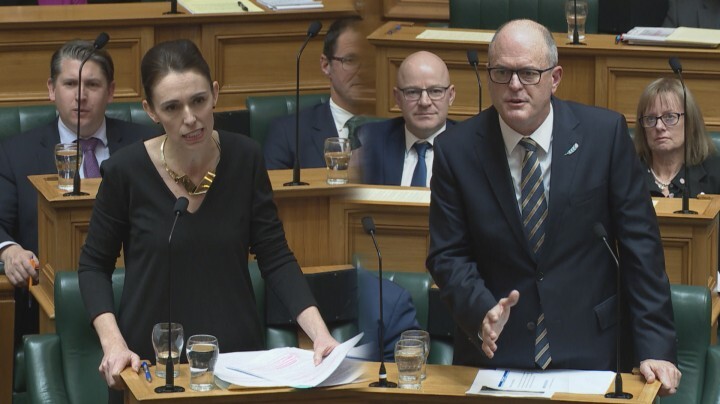
In a parliamentary session that riveted the nation, Prime Minister Elena Kargas and Leader of the Opposition Elias Metros clashed over one of the most urgent issues facing the United States of Thessara: the skyrocketing cost of housing. The debate, marked by impassioned speeches and pointed exchanges, laid bare not only the divide between the ruling government and opposition but also the deep challenges of addressing an issue that affects millions of citizens.
—
The Context: A Nation Struggling with Housing Costs
Thessara has seen an unprecedented surge in housing prices over the last five years, with urban centers like Laryssa, Arcina, and Thessaropolis recording rent increases of up to 40%. A combination of factors—including speculative investment, inadequate housing supply, and a growing population—has made it increasingly difficult for citizens to afford homes.
In rural areas, the problem is different but equally pressing: younger generations are migrating to cities, leaving smaller towns with declining property values and abandoned homes, creating a widening economic and social disparity.
—
The Government’s Position: Progress Amidst Complexity
Prime Minister Elena Kargas opened the debate by emphasizing her administration’s efforts to address the housing crisis through a mix of subsidies, development incentives, and long-term urban planning.
“This government recognizes the burden that housing costs have placed on Thessaran families. That’s why we’ve taken bold action to increase the supply of affordable housing, provide direct support to those in need, and lay the groundwork for sustainable growth in our cities,” Kargas said.
She cited key achievements, including the construction of 15,000 affordable housing units over the past year and tax incentives for developers building sustainable, low-cost homes.
“Housing crises are not solved overnight,” she added. “What we face is not just a national problem but a global one. Speculation, population growth, and urbanization are forces that no government can reverse with a single policy. What we can do—and are doing—is creating the conditions for long-term stability.”
—
The Opposition’s Argument: Delays and Root Causes
Elias Metros, Leader of the Opposition, delivered a sharp critique of the government’s approach, accusing Kargas’s administration of being slow to act and overly reliant on market-driven solutions.
“Madam Prime Minister, you speak of progress, but progress delayed is progress denied. For thousands of families struggling to pay rent or buy their first home, your long-term plans are cold comfort when their paychecks are swallowed up each month by skyrocketing costs,” Metros began.
Metros argued that the root cause of the crisis lay in years of unchecked speculative investment and lenient policies that allowed large developers and foreign investors to dominate the housing market.
“The problem isn’t just a lack of supply; it’s who controls the supply. Developers are sitting on vacant properties, waiting for prices to climb even higher. Speculators—some of them foreign—have turned our cities into playgrounds for profit, driving prices beyond what ordinary Thessarans can afford. And what has this government done? Handed them tax breaks,” he said, drawing applause from his bench.
He criticized the government’s failure to implement rent controls or penalties for vacant properties, policies he claimed would have provided immediate relief.
“Why does this administration shy away from bold measures? Is it fear of upsetting your corporate allies? Or perhaps you believe the market will magically fix itself, as it has failed to do time and time again?” Metros continued.
—
Delays in Action: The Opposition’s Case
A central theme of Metros’s argument was the government’s delay in addressing the crisis. He pointed to studies showing that housing costs began climbing nearly a decade ago and argued that the current government had missed critical opportunities to intervene.
“The writing has been on the wall for years. Yet your administration waited until the crisis reached breaking point before taking action. Now, you ask Thessarans for patience while developers line their pockets and families line up for scarce affordable units,” he said.
Metros also claimed that the government’s focus on urban centers neglected rural housing issues, further exacerbating economic disparities.
“What about the forgotten towns and villages of Thessara? While cities face scarcity, rural areas are drowning in abandoned homes and economic stagnation. Where is your plan to bridge this divide?”
—
The Prime Minister’s Rebuttal: Pragmatism Over Populism
Prime Minister Kargas pushed back against Metros’s criticisms, defending her government’s incremental approach as necessary for sustainable change.
“It’s easy to stand on the sidelines and shout about bold measures, but governing requires pragmatism, not populism. Rent controls may sound appealing, but they often lead to reduced housing availability and discourage development—exactly what we cannot afford in a growing nation like Thessara,” Kargas argued.
She also dismissed Metros’s accusations of favoritism toward developers, pointing to strict conditions tied to the incentives her administration provided.
“Every tax incentive we’ve granted has been conditional on delivering results: affordable homes, sustainable designs, and jobs for Thessarans. This is not a giveaway; it’s an investment in our future.”
On rural housing, Kargas acknowledged the challenges but emphasized ongoing efforts to revitalize smaller towns through infrastructure development and incentives for young families to stay.
—
The Verdict: A Clash of Vision and Frustration
Analysts and observers were divided over who won the debate. Kargas’s arguments showcased her government’s depth of planning and understanding of the complexities involved, but Metros struck a chord with his critiques of delays and his focus on the human cost of inaction.
“Metros tapped into a raw frustration that many citizens feel,” said political commentator Nikos Vallas. “While Kargas presented a logical and balanced case, her responses lacked the immediacy that many want to hear.”
—
A Nation Awaits Solutions
As the debate concluded, the housing crisis remained as pressing as ever. For Kargas, the challenge lies in accelerating her administration’s plans while proving that her policies can deliver tangible results. For Metros, the question is whether his critiques can translate into a viable alternative that resonates beyond the parliamentary chamber.
The stakes are high for both leaders—and for the millions of Thessarans caught in the crossfire of a crisis that shows no signs of abating.
